
Episode transcript
Welcome to Korean Slang School Starter Pack!
This is a podcast for Korean language learners—especially complete beginners who have just finished learning Hangul.
In each episode, we’ll learn useful basic sentences, everyday words, fun expressions, and interesting Korean cultural insights.
Wait—what if you already speak some Korean? If you’d like to listen to content entirely in Korean, check out the original Korean Slang School podcast for intermediate and advanced learners. You can find the link in the episode description. You’ll find deeper dives into Korean language and culture there.
All right, shall we begin?
I have a question for you.
How do you say “Hello” in Korean?
Yes! 안녕하세요.
But have you ever thought about what 안녕하세요 literally means?
The word 안녕 means “peace,” “well-being,” or “being safe and well.” 안녕하세요 comes from the expression 안녕하다, meaning “to be well” or “to be at peace.”
So the feeling behind 안녕하세요 is something like:
“Are you well?”
“Are you at peace?”
Or simply, “I hope you are well.”
Of course, English speakers usually say “Hello” and then ask, “How are you?”
But in Korean, 안녕하세요 already carries the idea of asking whether someone is well. So Koreans do not always add a direct translation of “How are you?” afterward.
Then what can you say when the conversation suddenly becomes quiet and awkward?
Surprisingly, Koreans often ask:
“Did you eat?”
밥 먹었어요?
밥 means “rice,” but it can also mean “a meal.” Rice has traditionally been the central part of a Korean meal, so 밥 came to mean not only cooked rice but also the whole meal.
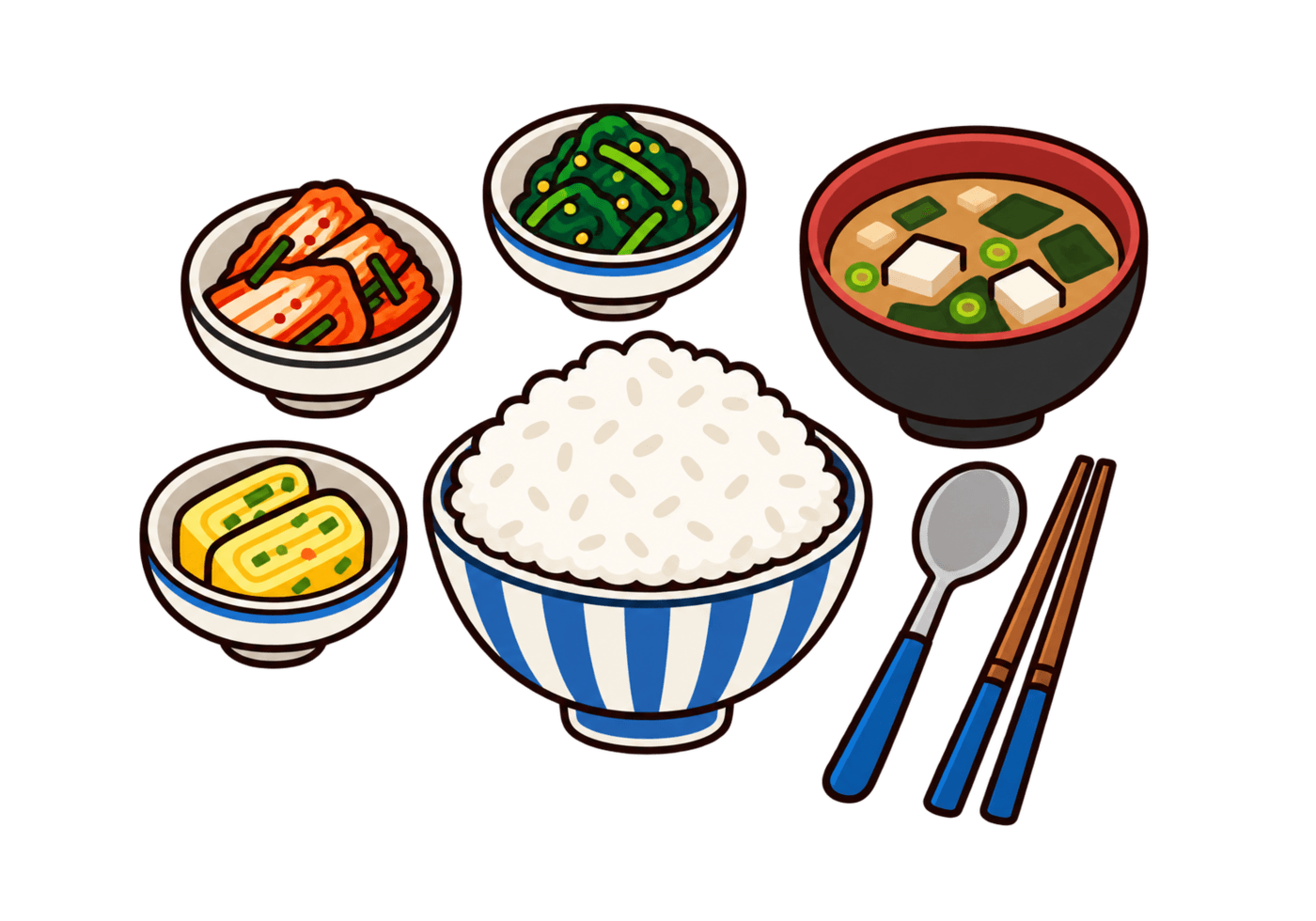
Even if you ate pasta or a sandwich, a Korean person may still ask:
밥 먹었어요?
Did you eat? Have you had a meal?
And 먹었어요? means “Did you eat?”
Let’s try it with different meals.
아침 means “breakfast.”
아침 먹었어요?
Did you have breakfast?
점심 means “lunch.”
점심 먹었어요?
Did you have lunch?
저녁 means “dinner.”
저녁 먹었어요?
Did you have dinner?
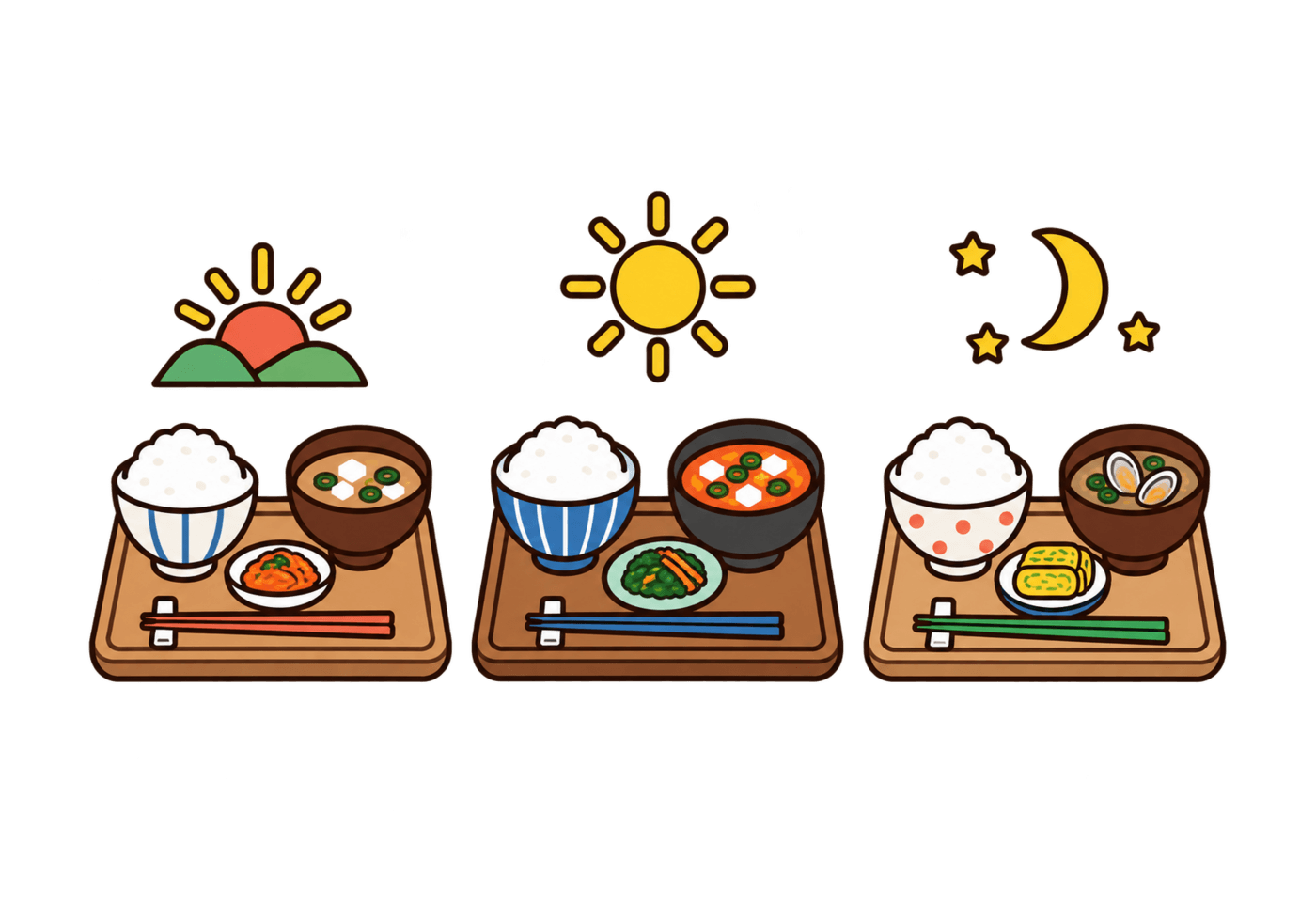
Or you can simply say:
밥 먹었어요?
Did you eat?
Okay, now we know how to ask, “Did you eat?”
But you may have another question.
Why do Koreans ask this silly question?
Well, it is not actually a silly question.
There’s also some history behind this expression.
For a long time, Korea was an agricultural society. And farming was not something one family could always manage alone. People in the village often worked together, especially during busy seasons like rice planting and harvesting.
And, of course, when people worked together, they also ate together.
During the workday, farmers would stop and share a small meal or snack called 새참, or saecham. It could include things like rice, noodles, kimchi, or makgeolli, a traditional rice wine. After finishing a big farming project, people would often gather again to eat, drink, and celebrate.
So food was not only about filling your stomach. Sharing food brought people together. It was a way to thank someone for their work, welcome them into the community, and strengthen relationships.
The same was true when a guest visited your home. Offering food was—and still is—an important part of Korean hospitality. Even if the guest said, “No, thank you. I’m fine,” the host would probably ask again:
“Are you sure? Have you eaten?”
In other words, asking about food often came with a real offer to take care of someone.

There is another important part of the story. Korea went through many difficult periods, including poverty, war, and serious food shortages. Especially during and after the Korean War, having three meals a day was not something everyone could take for granted.
For older generations, asking, “Did you eat?” could therefore be a genuine way of asking:
“Are you all right?”
“Do you have enough food?”
“Are you healthy and safe?”
You may sometimes hear that Koreans started using this greeting only because people were poor and hungry. But that explanation is probably too simple. We do not have clear historical evidence showing that the expression began for that one reason.
Food shortages certainly made the question more serious and meaningful. But Korea’s farming traditions, its culture of sharing meals, its hospitality, and the habit of caring for others through practical actions were also important.
So 밥 먹었어요? is not just a question about your last meal.
Depending on the situation, it can mean:
“How have you been?”
“Are you taking care of yourself?”
Or simply, “I care about you.”
So it is better to understand the expression this way:
밥 먹었어요? is not simply a question about rice. It is a small, practical way of checking on someone’s well-being.
It is similar to “How are you?”—but it is not exactly the same.
In English, when someone asks, “How are you?” you might automatically answer, “Good, thanks,” even if you are not having a great day.
But when a Korean person asks, 밥 먹었어요?, you can answer honestly.
If you have eaten, say:
네, 먹었어요.
Yes, I ate.
If you have not eaten yet, say:
아니요, 아직 안 먹었어요.
No, I haven’t eaten yet.
Or more simply:
아직이요.
Not yet.
So the next time a Korean person asks you, 밥 먹었어요?, don’t be surprised.
They are not investigating your eating habits.
They may simply be saying:
“I care about you.”
“I hope you’re doing well.”
And possibly, “Let’s eat together.”
Before we finish, let me ask you one more time.
밥 먹었어요?
If not, please go and eat something delicious!
Now we’ve got one more Korean phrase packed and ready to use. Keep learning, keep speaking, and I’ll see you next time. 다음에 만나요!