Episode transcript
한국인이 쓰는 진짜 표현 Korean Slang School 현주입니다. Hi everyone! This is Hyunju from Korean Slang School, where you learn real Korean expressions. Welcome back to the podcast. In this episode, you’ll get cultural insights in English with some Korean expressions. If you’d like to practice listening, you can find the previous episode in full Korean.
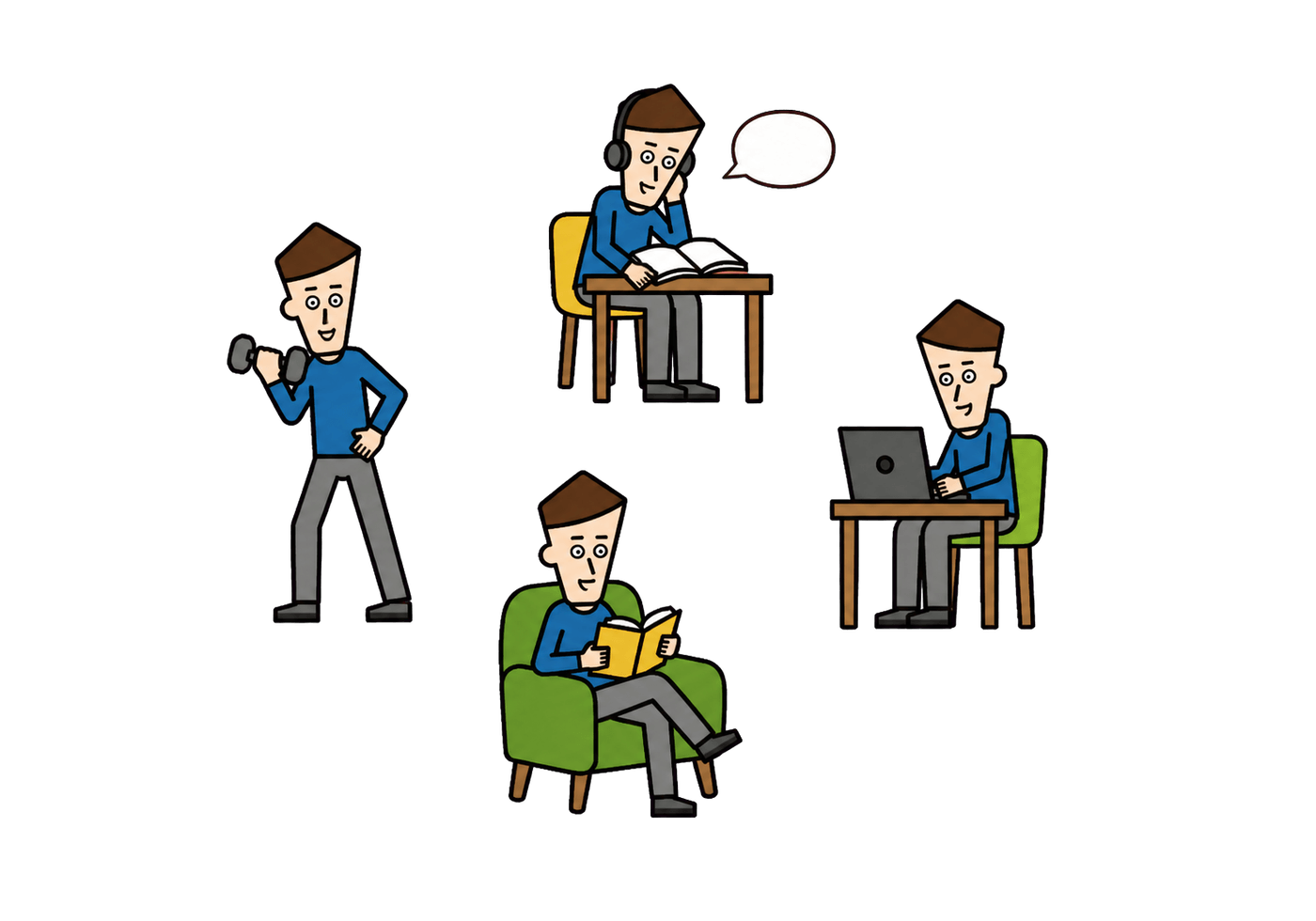
오늘 정말 바빴어요. I was really busy today. 바빠요 means “busy.” I woke up early in the morning, 일찍 일어났어요, worked out, 운동했어요, studied a language, 외국어 공부했어요, worked, 일했어요, and read a book, 책 읽었어요. It was a super productive day! When you live a productive life, Koreans say “Godsaeng!”
What is “Godsaeng”?
Have you heard the expression Godsaeng before? It’s a Korean slang word that comes from combining the English word “God” and the Korean word saeng (생), short for saenghwal (생활), which means “life.” So literally, it means “living like a god.” But don’t worry, it’s not religious! It just refers to someone living a very diligent, productive life.
Waking up early, exercising, studying, working hard, reading books, and eating healthy food are all part of the lifestyle we call Godsaeng. In Korea these days, especially among younger people in their teens (10대), 20s (20대), and 30s (30대), there’s a big trend of trying to live a “Godsaeng” life. Everyone wants to be productive and improve themselves.
Where did “Godsaeng” come from?
Actually, this term didn’t just appear recently. It started around 2020. 이천이십년! Do you remember what happened in 2020? That’s right, COVID-19. When the pandemic hit, everything changed. Schools moved online, companies shifted to remote work, and people suddenly had a lot of time at home.
But with all that time indoors, it was easy to fall into lazy routines, scrolling on your phone (핸드폰 봐요) or lying in bed all day (침대에 있어요). So people started trying to build better routines. That’s when the Godsaeng trend really took off. You can even find Godsaeng vlogs on YouTube or #갓생 posts on Instagram.
There are even Godsaeng checklists now, with goals such as working out at least three times a week (일주일에 세 번 운동하기), reading four books a month (한 달에 책 네 권 읽기), reading the news in the morning (아침에 뉴스 읽기), and keeping a daily journal (일기 쓰기). People who live this way are sometimes called “Godsaengers” (갓생러) in Korean. 여러분은 갓생러예요? Are you a 갓생러?
And even though COVID is over now, the Godsaeng lifestyle is still popular. Why is that?
Why do people live a “Godsaeng” life?
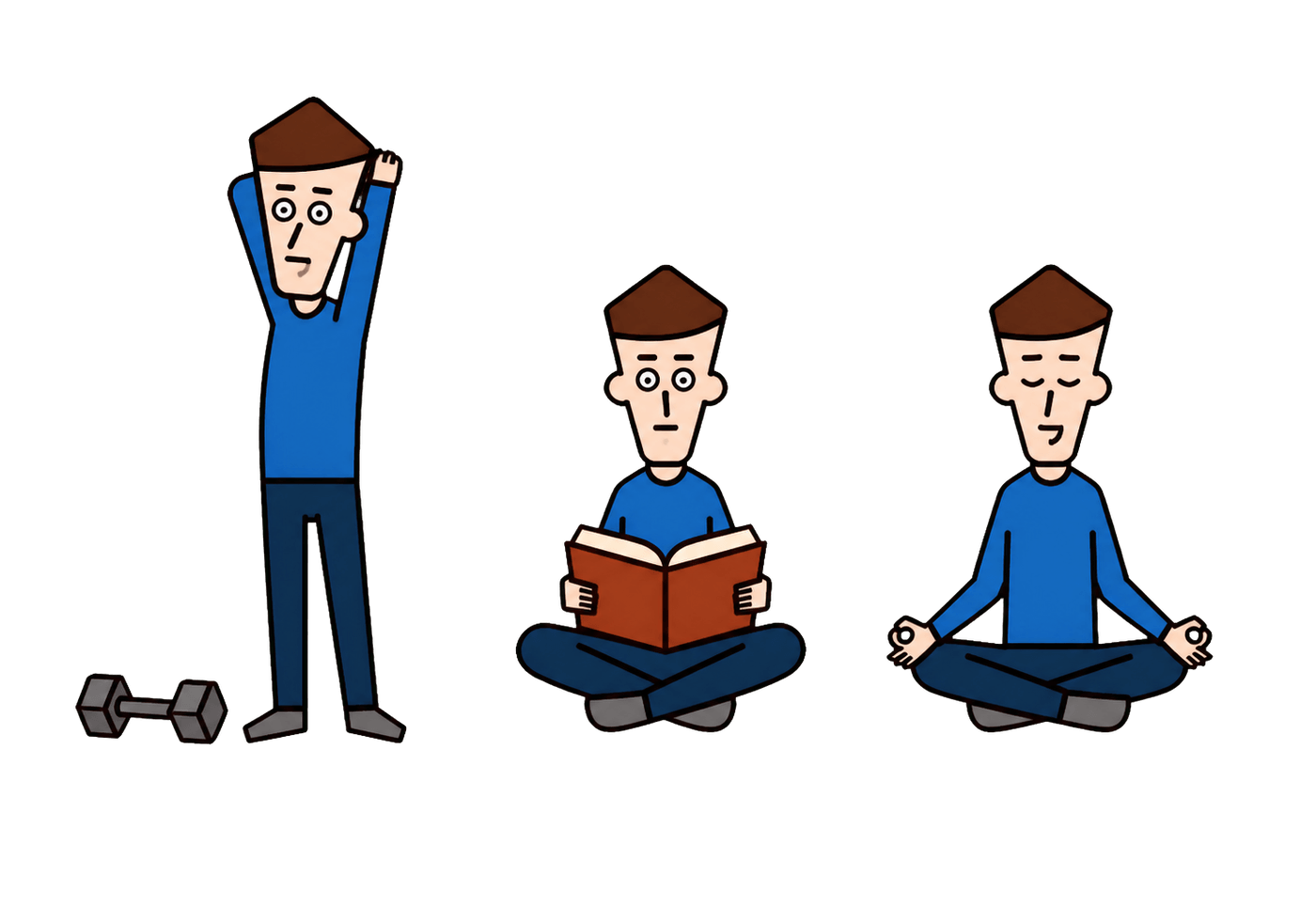
First, people have become more anxious since the pandemic. 불안해요 means “to be anxious.” Life changed so suddenly, 갑자기, and now many feel like the world could shift at any moment. Instead of making big future plans, people started focusing more on small things they can control today, such as exercising, meditating, or reading. These small actions help ease anxiety and give people a sense of stability.
Second, it’s harder to succeed now than in the past. A recent survey asked Koreans in their 20s to 40s: “Do you think it’s easier or harder for your generation to succeed compared to your parents’ generation?” Only 25% said it’s easier now, while 42% said it’s harder.
Why? Because it’s more difficult to find stable jobs, and housing prices are extremely high. In the past, graduating from university was enough to get a good job. But now, almost everyone goes to college, so that’s not enough anymore. You also need foreign language skills, computer skills, and various certifications. In Korea, these extra qualifications are called “spec 스펙” (from the English word “specifications”), and they’re very important when applying for jobs.
To build up your “spec,” you have to study languages, earn certificates, and read books. These are all things that naturally lead to a Godsaeng lifestyle.
Between Achievement and Burnout
Some people feel a great sense of achievement from living this way. But for others, it can lead to burnout 번아웃. Personally, I’ve experienced burnout many times, so I value something else more than Godsaeng: work–life balance, or in Korean, 워라밸 (wora-bael).
In fact, Korea is known for having long working hours compared to other OECD countries. In 2022, Koreans worked about 1,874 hours per year, while the OECD average was around 1,752 hours. That’s 122 more hours a year, or about three extra 40-hour workweeks!
Though working hours are gradually decreasing, people still work a lot. That’s why many are thinking hard about how to balance their personal life with work. Living each day productively is great, but taking care of your physical and mental well-being is just as important.
So today, we talked about the Korean slang word Godsaeng. What about you? Are you living a Godsaeng life right now? Or are you focusing more on your work–life balance? I’d love to hear your story. Leave a comment and let me know!
And if you want to practice listening, you can go back to the previous episode for the full Korean version. I’ll be back next time with more fun Korean expressions and cultural stories.
This was Hyunju from Korean Slang School. 안녕~!