
Episode transcript
한국인이 쓰는 진짜 표현 Korean Slang School 현주입니다. Welcome back to Korean Slang School! In this episode, you can listen to cultural insights in English with Korean expressions. It is recommended for beginners. You can find the full Korean version in the previous episode.
여러분, 새해 복 많이 받으세요. Happy New Year!
What? It’s already February, and I’m saying Happy New Year?
That’s because tomorrow is Seollal, Lunar New Year!
Do you know Seollal? Seollal is one of the biggest national holidays in Korea. It is New Year’s Day based on the lunar calendar.
The lunar calendar is based on the moon, not the sun, so it’s always about one or two months different from the solar calendar. This year, Lunar New Year falls on February 17.
Wait a second! 잠깐만요! Does that mean Korean people celebrate New Year twice?
네, 맞습니다! Yes, that’s right!
So we say “새해 복 많이 받으세요,” or “Happy New Year,” twice: once on January 1 and once again on Seollal, Lunar New Year.
Usually, we call January 1 “새해, New Year” and Lunar January 1 “Seollal.” Just as the names are different, the way we celebrate is also a little different.
On December 31, New Year’s Eve, people have parties and prepare for the countdown at night. Many people go to a special place in Seoul called Bosingak.
At Bosingak, there is a special bell-ringing ceremony.
Bosingak is a pavilion with a large traditional bell. A long time ago, during the Joseon Dynasty in the 14th century, this bell was used like a clock. Since people didn’t have clocks back then, they rang the bell to tell the time.
But today, the bell rings only on special occasions. At midnight on December 31st, they ring the bell to announce the start of the new year.
This event is called “제야의 종, Jeya-ui Jong,” which means “The Bell of New Year’s Eve.”
As midnight approaches, people count down together: 10, 9, 8, 7, 6, 5…
At exactly midnight, people ring the bell.
They ring it 33 times. In Buddhism, there is a belief that there are 33 heavens, so ringing the bell 33 times symbolizes announcing the new beginning to those heavens.
Some people celebrate at night like this, but others celebrate the new year on January 1. Waking up early and going to the mountains or the beach is one of the most popular ways to celebrate.
They go to watch the first sunrise of the year. In Korean, this is called “해돋이 hae-do-ji,” meaning sunrise.
One of the most popular places is Ulsan. Because it is on the eastern coast, you can see the sunrise there first.
I also went hiking once on January 1st to see the first sunrise.
Honestly, I was terrified. 너무 무서웠어요
I didn’t realize how dark it would be before sunrise. Hiking at night was really hard, but when I finally saw the sun from the top of the mountain, it was so beautiful. It felt really special.
How did you celebrate the New Year in your country?
Here in the Czech Republic, I ate a party food called jednohubky, drank champagne at midnight, and watched fireworks.
How about you? You can leave a comment and tell me how you celebrate the New Year in your country!
Now, shall we talk about how Koreans celebrate Seollal?
Since Seollal is a major holiday, people usually spend time with their families. 가족하고 시간을 보내요
If New Year’s Day is often spent with friends or partners, Seollal is for family and relatives.
There is also a very important tradition called sebae. 세배
Sebae is a formal bow to elders.
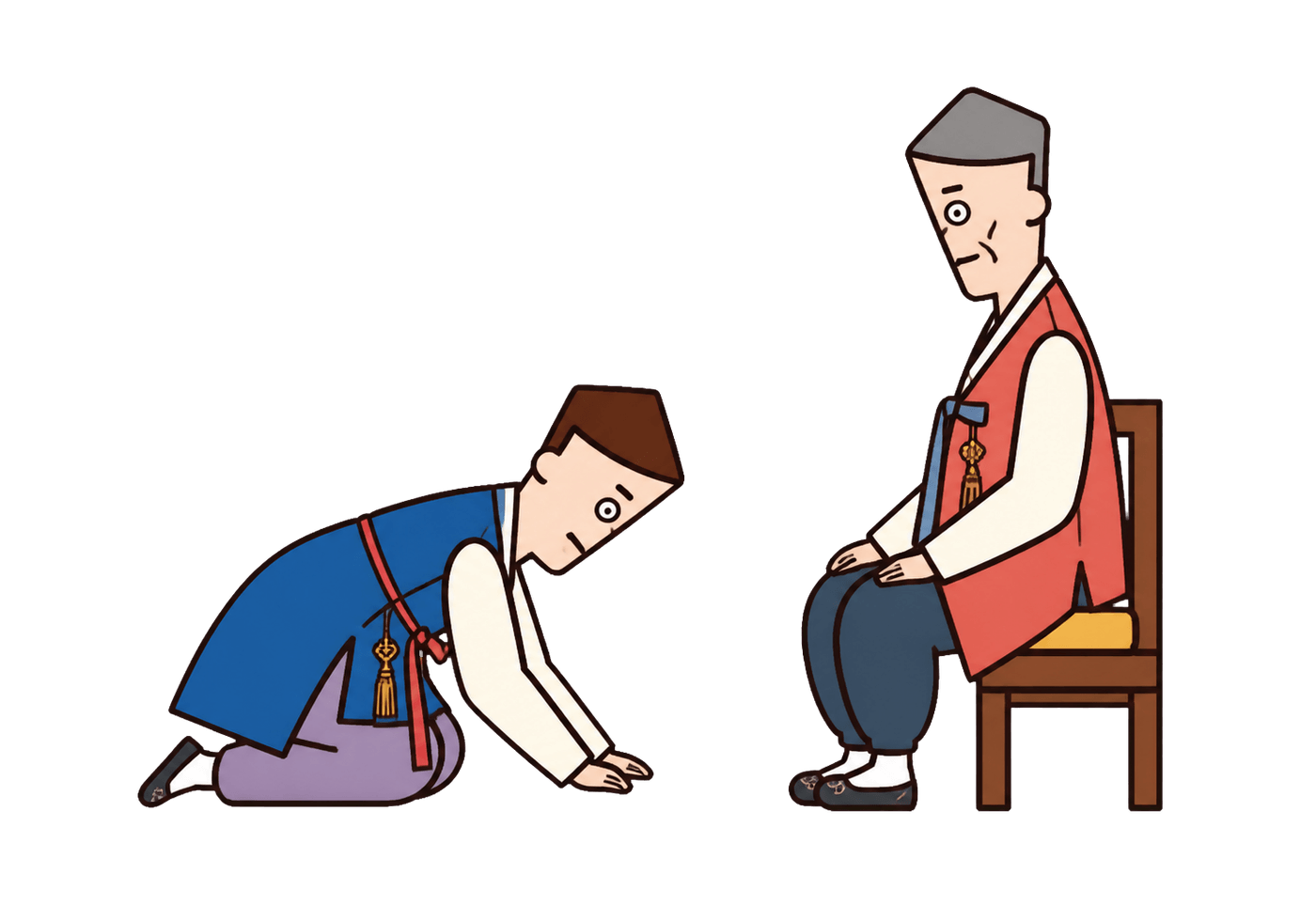
It’s not just saying hello. You kneel down and bow deeply to show respect. And you say:
“새해 복 많이 받으세요 Happy New Year.”
Then the elders give you kind words called deokdam 덕담, which means blessings.
For example:
“Stay healthy.” 건강해라 “I hope you have a wonderful year.” 새해 복 많이 받아라 “Study hard.” 공부 열심히 해라
And there is something children love the most.
It’s called sebaetdon 세뱃돈, or New Year’s money!
After doing the bow, elders give money in an envelope.
That’s why children wake up early and bow very hard.
Because they want the money!
When I was young, I loved Seollal for this reason.
But what happens when you become an adult?
Yes… that’s right…
Now I’m the one who gives the money…
It’s very sad… haha.
Another important tradition is eating tteokguk, rice cake soup.
Tteokguk is a soup made with sliced rice cakes.
The rice cakes look like coins, so people eat them to wish for wealth in the new year.
There is another meaning too.
Originally, the rice cake used to make tteokguk is very long, so it also symbolizes wishing for a long life.
There is also a very interesting cultural belief.
In the past, Koreans believed that you become one year older after eating tteokguk on Seollal.
So instead of asking, “How old are you?” people would joke and ask,
“How many bowls of tteokguk have you eaten?” 떡국 몇 그릇 먹었어요?
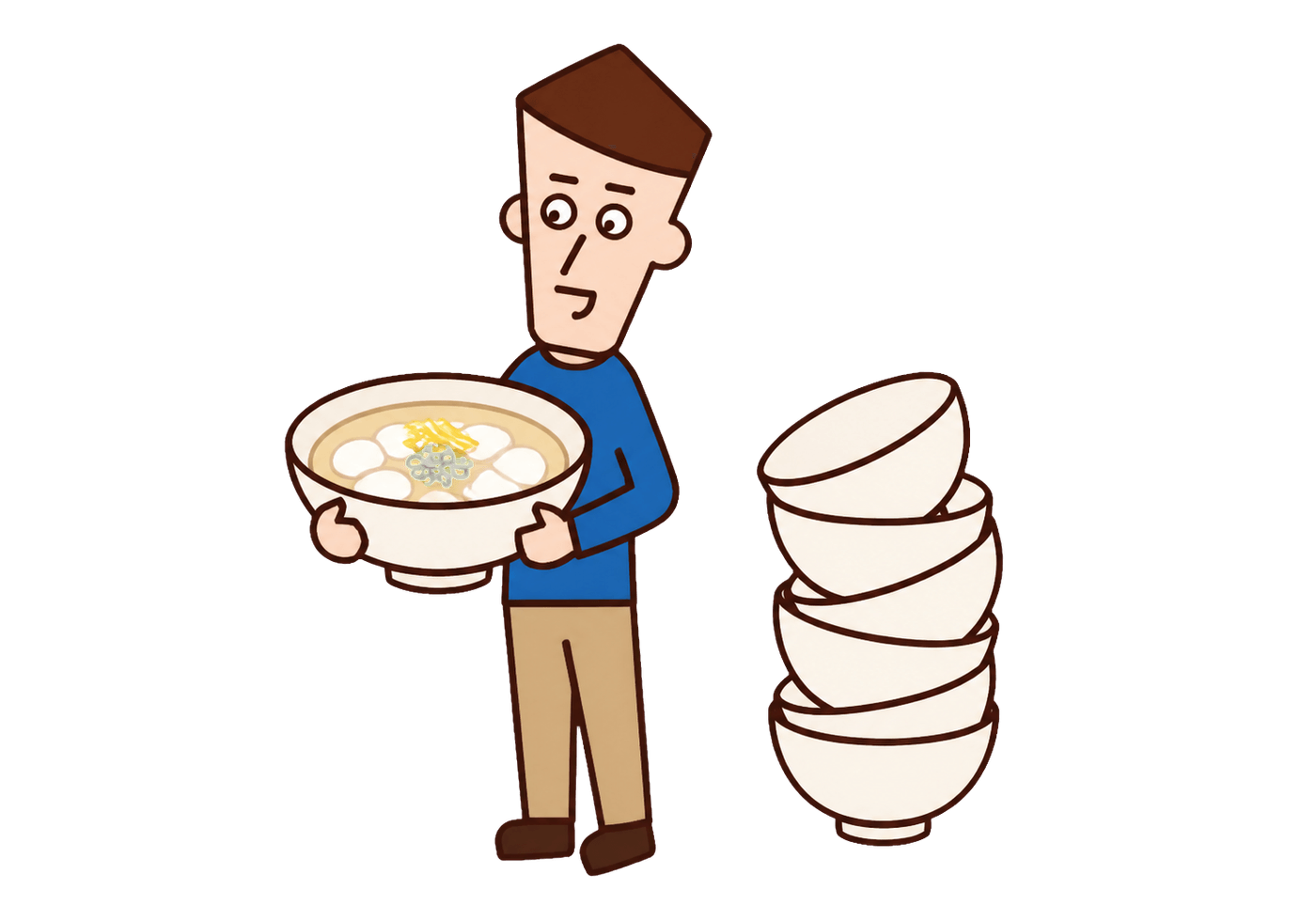
I’ve eaten about… thirty bowls…
Time flies… 시간이 정말 빨라요
How many bowls have you eaten? 여러분은 떡국 몇 그릇 먹었어요?
Zero? 안 먹었어요??
If you’re curious, you can find many recipes online and try making it yourself.
It’s really delicious! 정말 맛있어요!
And lastly, if you want to greet Korean people on Seollal, try saying this:
“Happy New Year.” 새해 복 많이 받으세요
In Korean:
“Saehae bok mani badeuseyo.” 새해 복 많이 받으세요
Here, 새해 means “new year,” 복 means “luck,” 많이 means “a lot,” and 받으세요 means “please receive.” Altogether, it means “I hope you receive lots of luck in the new year.”
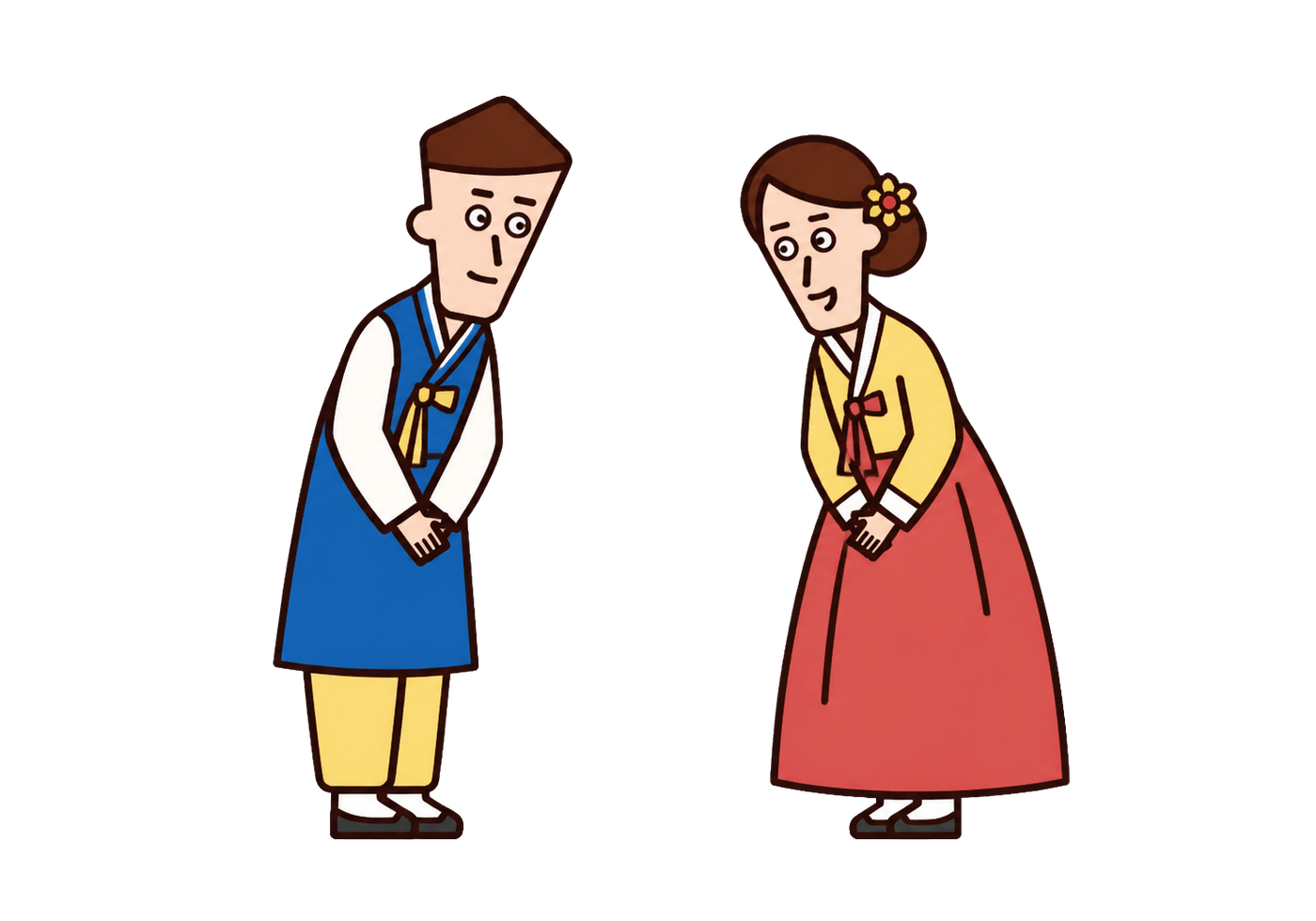
Korean people will really appreciate it.
Today, we talked about Seollal, Korean Lunar New Year.
I hope you stay healthy, happy, and keep studying Korean this year.
Happy New Year! 새해 복 많이 받으세요
그럼 다음에 또 만나요. I’ll see you in the next episode. 한국인이 쓰는 진짜 표현 Korean Slang School 현주였습니다. 안녕