Episode transcript
Hello, everyone! Korean Slang School is back with Season 2! Yay!
In Season 1, we talked about Korean slang and expressions that Korean people really use. In Season 2, we’re going to talk about more than just slang. We’ll talk about Korean news, music, movies, history, culture, and many other interesting topics. I’m also working on a website where you can get the scripts for free, so please stay tuned!
By the way, how have you been? 잘 지냈어요?
It has been almost eight months since the last episode. My last episode came out in winter. Then spring came and went, and now it is already summer! 벌써 여름이에요!
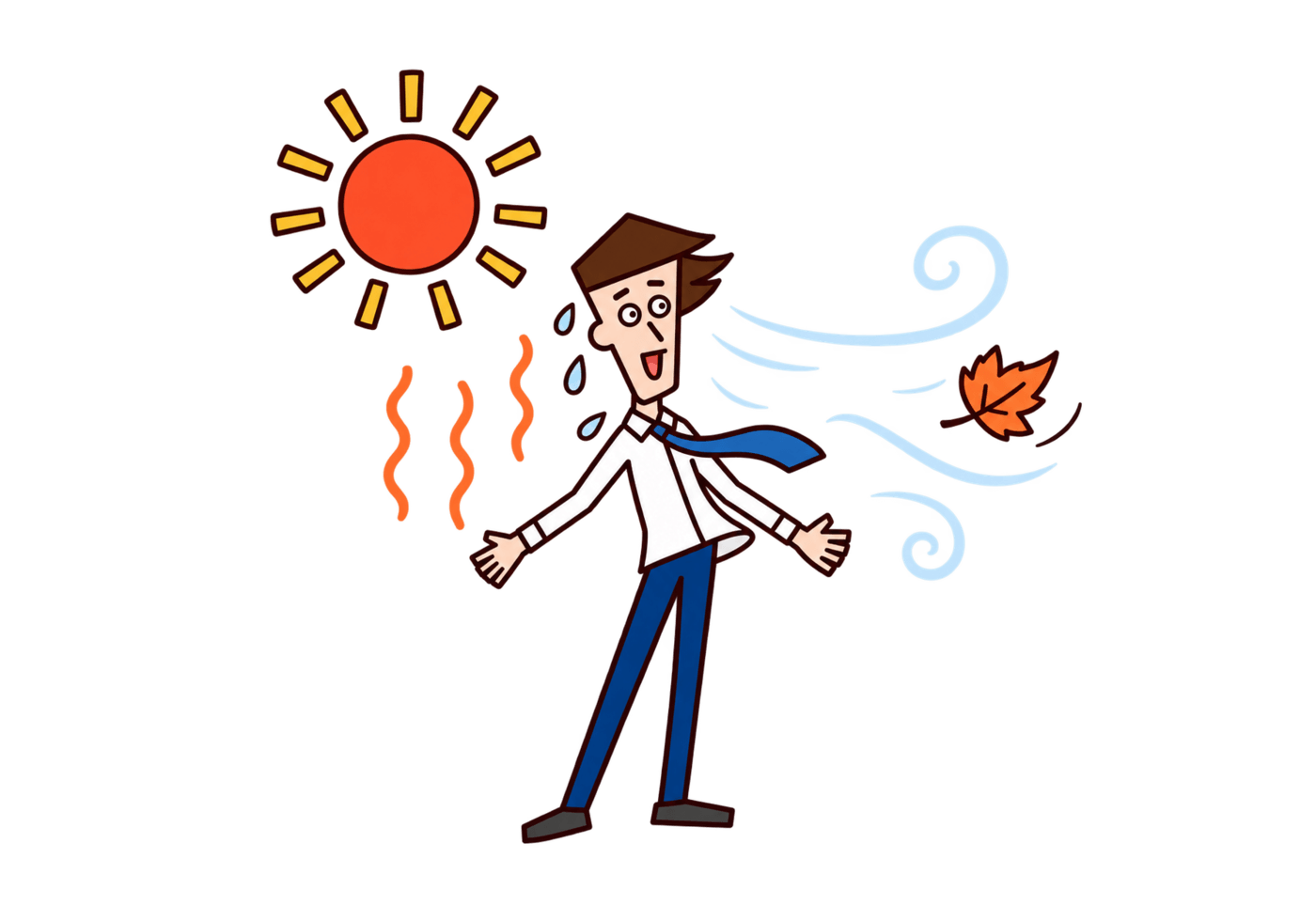
Today is August 8, and it is very, very hot. I’m recording this episode in the Czech Republic, and we are experiencing 폭염, a heat wave.
폭염 means “extreme heat” or “a heat wave.”
For example:
요즘 폭염 때문에 너무 더워요.
It is so hot these days because of the heat wave.
How is the weather where you are?
I heard that this summer is also extremely hot in Korea. So many Korean people are saying something like this:
“아… 제발 입추 매직!”
제발 means “please” or “please, I really hope so.” We use it when we really want something to happen.
Wait… what magic?
입추 매직! Ipchu Magic!
Today’s topic is a fun expression that Korean people use in summer: 입추 매직.
Have you ever heard this expression?
You probably know 매직. It comes from the English word “magic.” But 입추 might be a new word for you.
So, what is 입추?
입추 is written with two Chinese characters: 立, meaning “to begin,” and 秋, meaning “autumn.”
So 입추 literally means:
“the beginning of autumn.”
But 입추 is not a word that Korean people use every day. It is part of a traditional system called 절기.
What is 절기?
In a previous episode, we talked about two types of calendars:
양력, the solar calendar,
and 음력, the lunar calendar.
But Korea also uses another traditional system called 절기.
절기 means “solar term,” and 24절기 refers to the 24 solar terms.
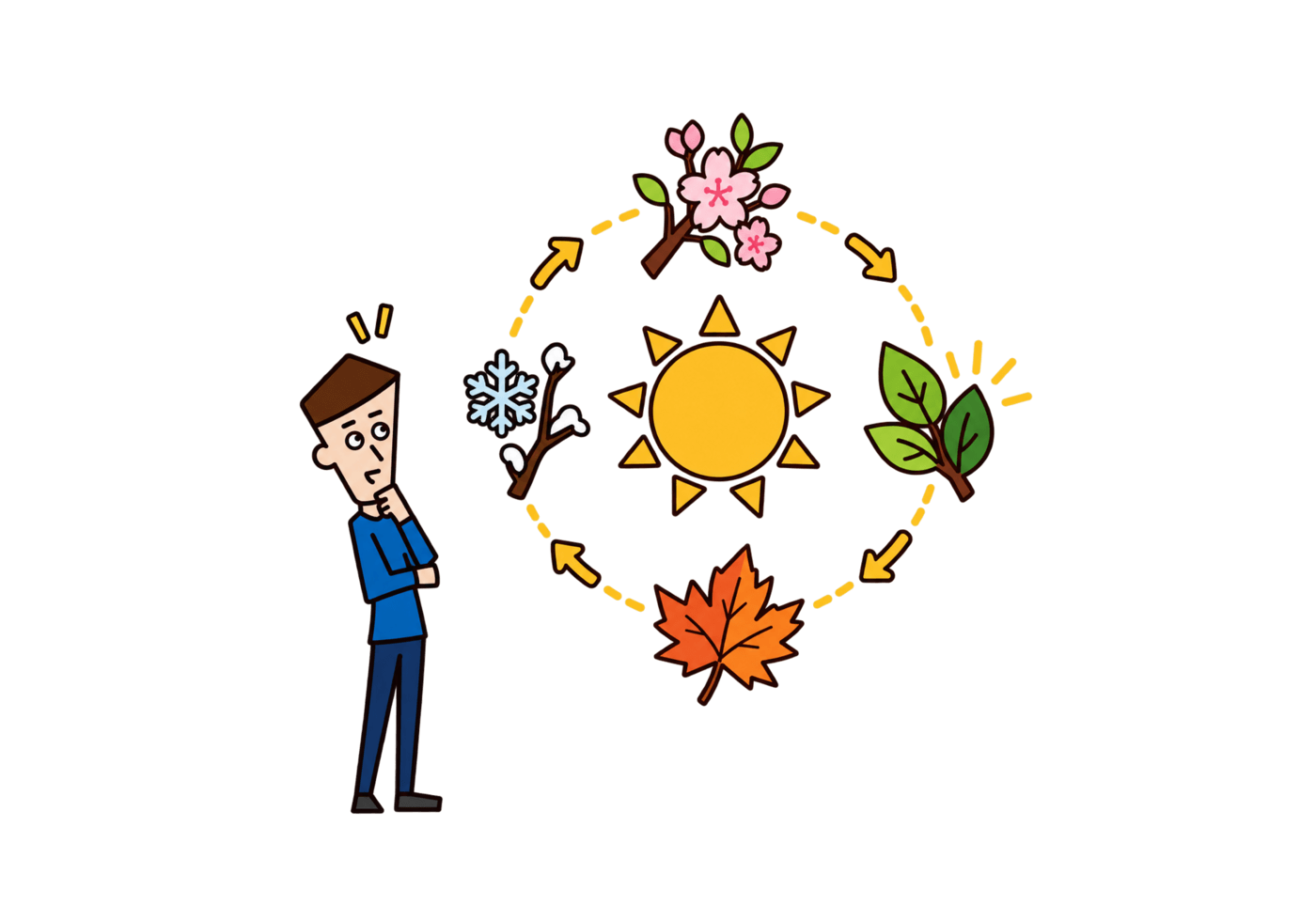
This system is based on the movement of the sun. From Earth, the sun appears to move 360 degrees during one year. If we divide those 360 degrees into 24 parts, we get the 24절기, or 24 solar terms.
One 절기 is about 15 days long, so there are usually two solar terms in one month.
A normal calendar divides one year into 12 months. But the 24 solar terms divide the year into smaller periods, so people can see changes in the seasons in more detail.
Where did the 24 solar terms come from?
The 24 solar terms did not originate in Korea.
They came from ancient China, especially around the Yellow River area.
At that time, many people lived by farming. And of course, weather was very important when you were a farmer.
Today, we can just look at our phones and check the weather.
“Will it rain tomorrow?”
“Will it be hot next week?”
Easy!
But people in ancient times did not have weather apps or modern calendars. So they watched the sky and the movement of the sun.
They used these changes to decide when to plant crops and when to harvest them.
Korea later started using this system too.
However, there was one problem. The system was originally based on the climate around the Yellow River in China, so the seasons did not always match Korea perfectly.
Later, during the Joseon Dynasty, King Sejong and Korean scholars made astronomical calculations using Hanyang, which is present-day Seoul, as their reference point.
For a long time, Korea was also an agricultural society, so 절기 worked like a farming calendar.
Today, we look at the calendar and say:
“아, 벌써 8월이네.”
Oh, it’s already August.
Here, 벌써 means “already.”
Or we might say:
“이제 여름도 거의 끝났네.”
Summer is almost over now.
이제 means “now” or “from now on,” and 거의 means “almost.”
In the past, people might have said:
“아, 입추가 왔네.”
Oh, Ipchu is here.
Or:
“이제 처서가 다가오네.”
Cheoseo is coming soon.
다가오다 means “to come closer” or “to approach.”
So people used the solar terms to feel that the year and the seasons were moving forward.
Do Korean people still use 절기 today?
Today, most Korean people are not farmers, and we can check the weather on our phones.
So we do not use the 24 solar terms in the same way anymore.
But they are still part of Korean life.
If you look at a Korean calendar, you can sometimes see words like 입춘, 하지, 입추, 처서, 동지 written in small letters.
You can also hear these words on the news.
For example:
“오늘은 절기상 입추입니다.”
Today is Ipchu according to the traditional solar terms.
Or:
“오늘은 24절기 중 열네 번째 절기인 처서입니다.”
Today is Cheoseo, the 14th of the 24 solar terms.
In the past, 절기 was an important farming calendar. Today, it is more like a cultural calendar that helps people notice the changing seasons.
Some traditions are also connected to the solar terms.
For example, on 동지, the shortest day of the year, Korean people sometimes eat 팥죽, red bean porridge.
And when spring begins around 입춘, people may start listening to spring songs or shopping for spring clothes.
This year, when 입추, the beginning of autumn, arrived, some people even started shopping for fall clothes.
And when summer is just too hot, Korean people sometimes say:
“올해 입추 언제야?”
When is Ipchu this year?
Or they might say, “제발… 입추 매직!”
So, what is 입추 매직?
This is where 입추 매직 comes from.
입추 happens in early August. Summer can be extremely hot before Ipchu, but sometimes, around this time, the weather suddenly becomes a little cooler.
Korean people say:
“거짓말처럼 날씨가 시원해졌어요.”
거짓말처럼 literally means “like a lie,” but in English, we can understand it as “almost unbelievably” or “as if by magic.”
People also say:
“와, 입추 매직이다!”
Wow, it’s Ipchu Magic!
It suddenly gets cooler, almost like magic!
Did Ipchu Magic work this year?
According to the news, 열대야, or “tropical nights,” eased a little in some areas after Ipchu, but daytime temperatures were still extremely high.
Summers are becoming hotter in many parts of the world, including Korea.
So now some Korean people say:
“Maybe Ipchu Magic doesn’t work anymore.”
And then they wait for something else.
처서 매직. Cheoseo Magic.
What is 처서 매직?
처서 is the solar term that comes after 입추.
In 2026, 처서 is on August 23.
I’m recording this on August 8, so we still have about two weeks to wait.
There is a very famous Korean saying about 처서:
“처서가 지나면 모기도 입이 삐뚤어진다.”
Let’s break it down.
모기 means “mosquito.”
Yes, mosquito.
Bzzzzzz~
That annoying summer mosquito!
입이 삐뚤어지다 means “the mouth becomes crooked.”
So literally, this saying means:
“After Cheoseo, even mosquitoes get crooked mouths.”
Of course, mosquitoes do not really get crooked mouths.
It means that after 처서, the weather becomes cooler, so even mosquitoes become weaker.
In other words, the intense summer heat starts to disappear.
That is why people now also use the expression:
처서 매직
Cheoseo Magic.
If Ipchu Magic does not work, people say:
“Okay… then let’s wait for Cheoseo Magic.”
So today, we talked about the Korean summer expression 입추 매직 and the story of the 24절기, the 24 solar terms.
In the past, the solar terms were an important calendar for farming. Today, they are still a way for Korean people to notice and talk about the changing seasons.
Does your country have a traditional expression like, “After this day, summer will be over,” or “This is when spring really begins”? If you have something similar, please let me know!
In Season 2 of Korean Slang School, we’ll continue learning real Korean expressions and the culture and stories behind them.
See you in the next episode!
한국인이 쓰는 진짜 표현, Korean Slang School. 현주였습니다. 안녕!