Episode transcript
한국인들이 쓰는 진짜 표현, Korean Slang School 현주입니다 🙂
This episode is in English, with some Korean words and expressions to help you understand what I talked about in the previous episode. If you’re more interested in learning about Korean culture, this episode might be helpful. If you want to practice listening, you can jump to the previous episode. 그럼 시작할까요?
Have you watched the movie K-Pop Demon Hunters? I watched it a few days ago, and I just had to come here and talk to you about it. Don’t worry, no spoilers in this episode, I promise!
Oh, and a quick note: in Korean, some people say “to do a spo” (스포하다), which is Konglish. “Spo” comes from the English word “spoiler,” but the phrase “do a spo” doesn’t actually exist in English. In English, we just say “to spoil” something, as in “Don’t spoil the movie for me!”
Anyway, back to the movie.
As the title suggests, K-Pop Demon Hunters is about K-pop idols fighting evil spirits, or demons. In this story, there are two idol groups: a girl group called Huntrix and a boy group named Saja Boys.
Let’s start with Huntrix. The group has three members, and honestly, they reminded me a little of BLACKPINK. In the movie, Huntrix defeats demons by singing!
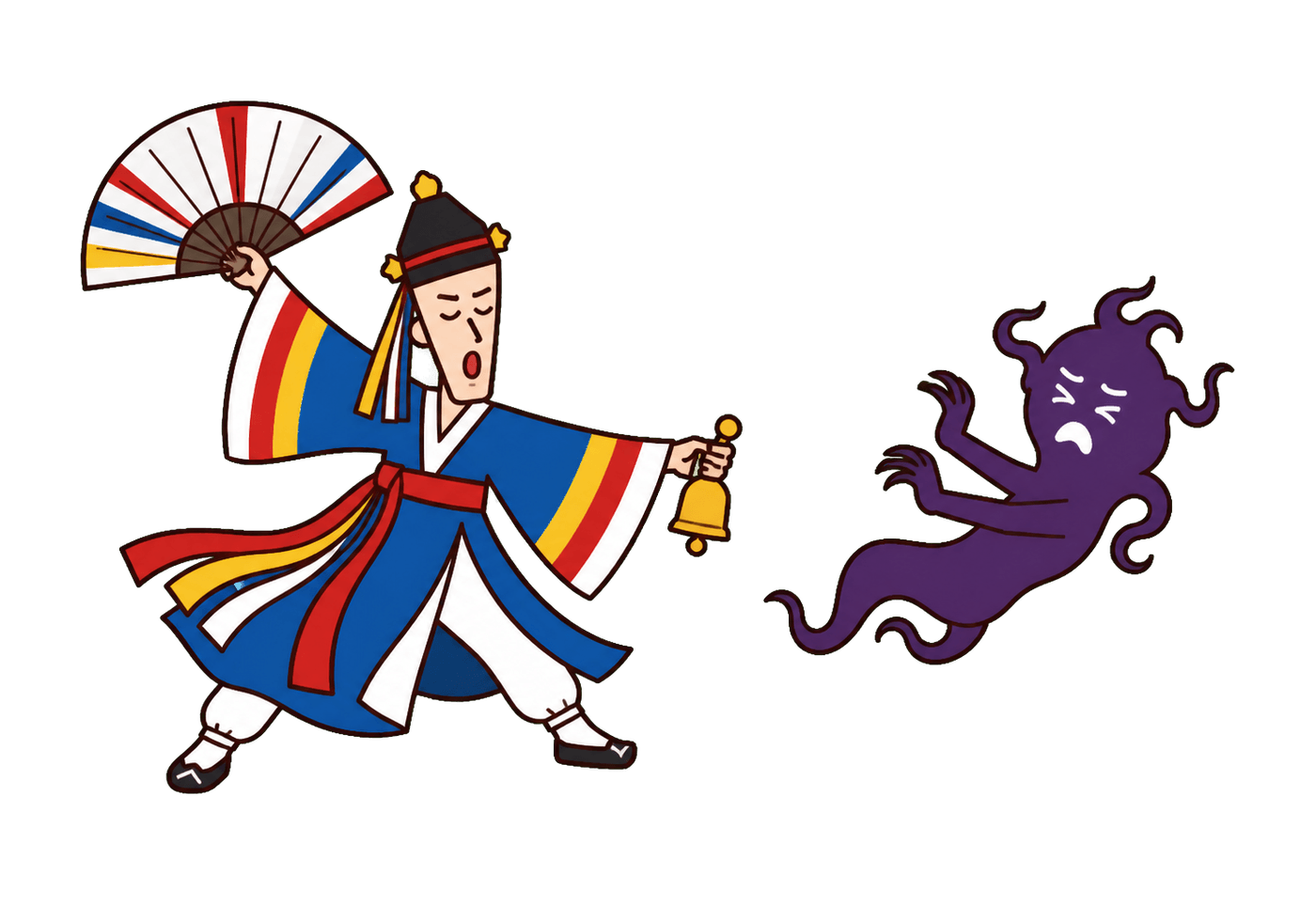
At the beginning of the movie, there was a scene showing previous generations of Huntrix defeating demons as far back as the Joseon Dynasty 조선시대. At that moment, I immediately thought of Korean shamanism. In Korea, shamans (called 무당 mudang) have long acted as mediators between the human world and the spirit world.
Of course, shamans don’t hold concerts like Huntrix, but they do perform spiritual rituals and ceremonies called “gut” (굿). During a gut, shamans often sing and dance to chase away bad spirits. In that way, Huntrix’s demon-fighting performances reminded me of those traditional rituals.
Now let’s talk about the boy group, Saja Boys. There are five members, and the leader is named Jinwoo. He’s incredibly handsome. 잘생겼어요 😍 One fun fact is that the character was inspired by Cha Eun-woo from the real-life boy group ASTRO.
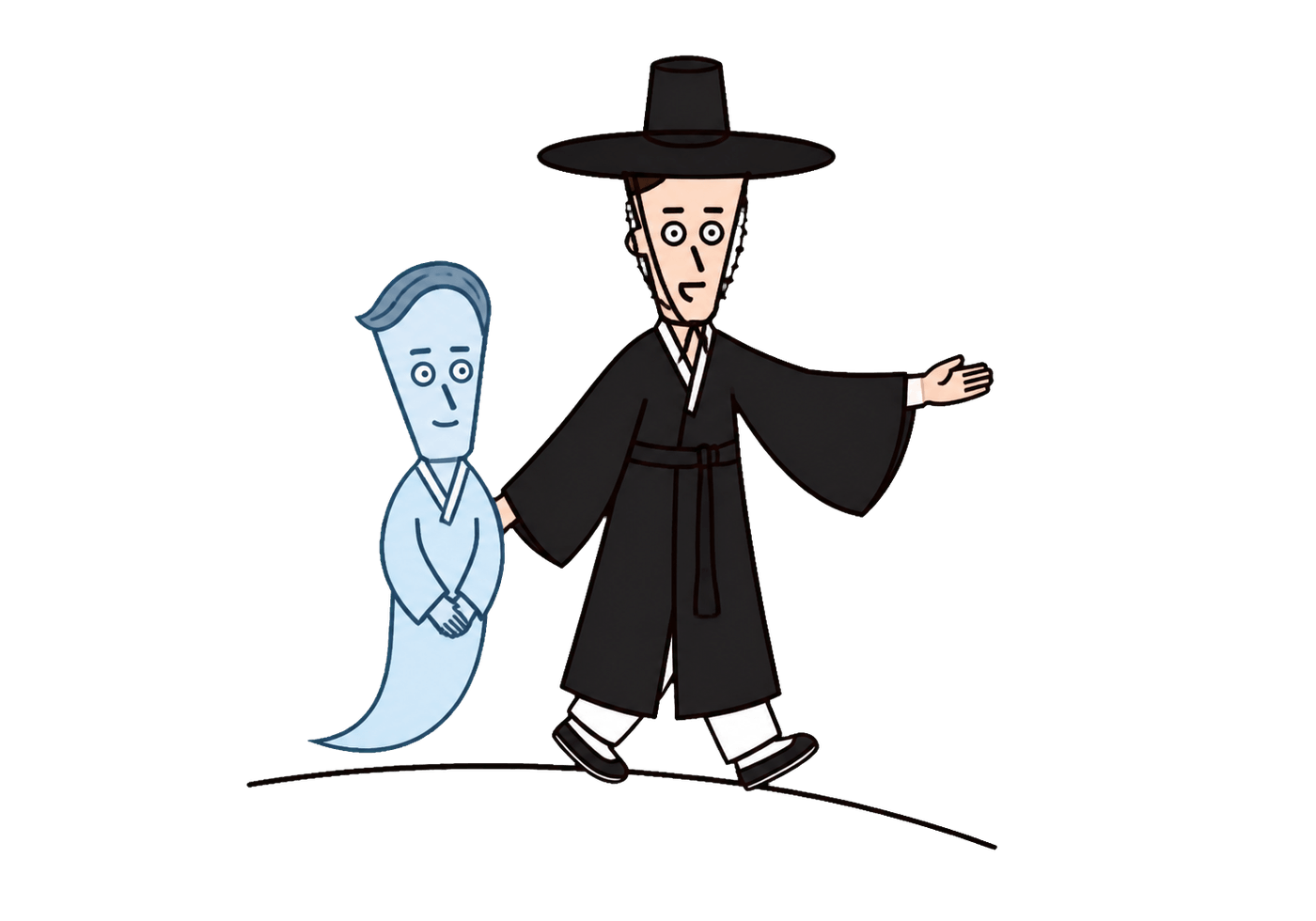
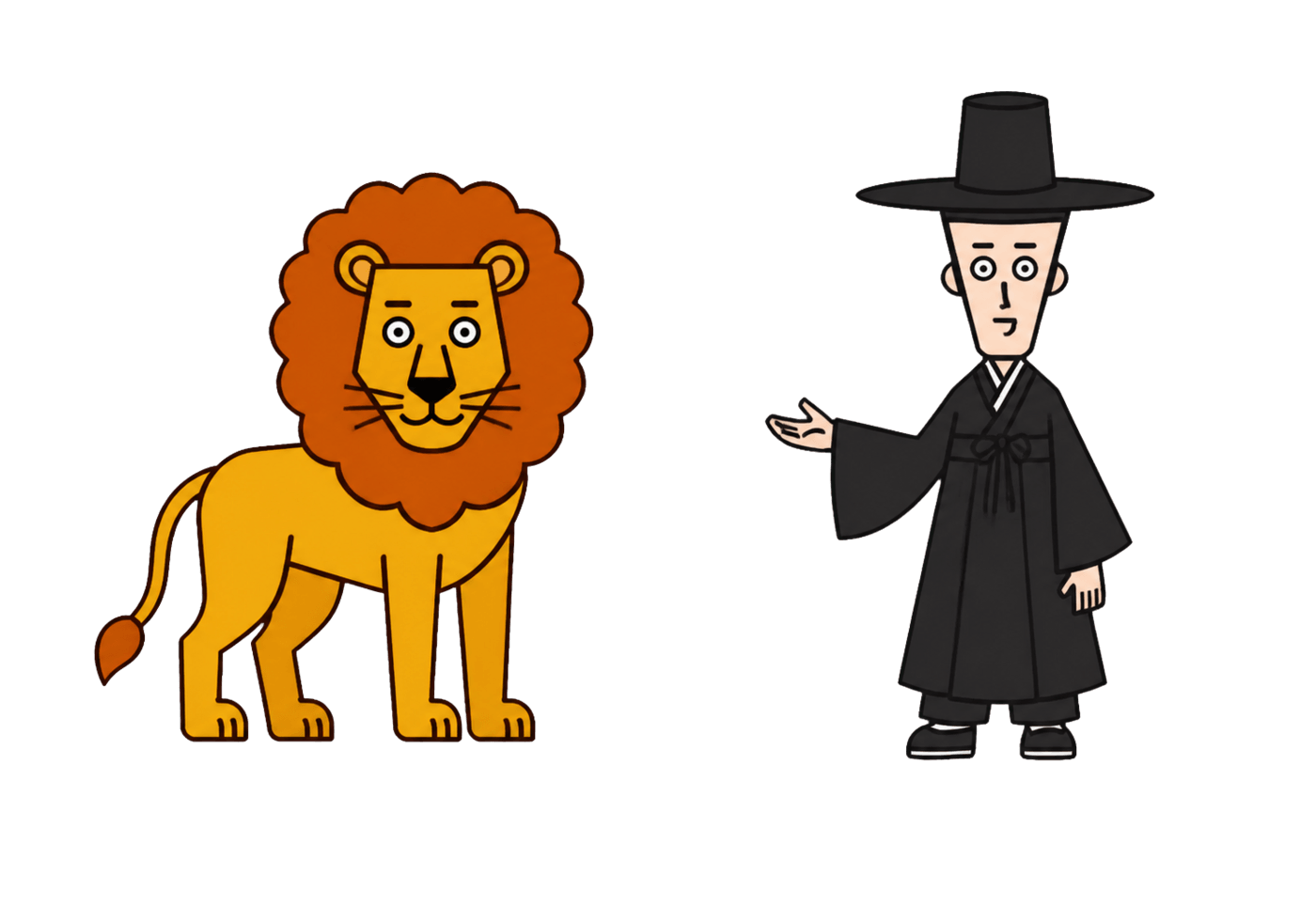
Saja Boys even have a logo! It’s a purple pentagon with a lion inside because “lion” in Korean is 사자. But here’s something interesting: the name “Saja” (사자) doesn’t actually refer to a lion, even though it is pronounced the same way in Korean. It refers to the Korean Grim Reaper, “Jeoseung-saja” (저승사자). In Korean tradition, the Jeoseung-saja is a spiritual being who guides the souls of the dead from this world (이승) to the next (저승). Many people in Korea still believe in them, and there are lots of stories about seeing a Jeoseung-saja in a dream or right before someone dies.
There are also many Korean series and movies with this Jeoseung-saja character. These characters are usually dressed in black, thanks to a scary TV show from the 1970s that first portrayed them that way. Since then, black robes and black hats have become the standard image.
In K-Pop Demon Hunters, the Saja Boys appear at the end wearing those traditional black outfits: black hanbok and black gat (a traditional Korean hat). It reminded me of another popular drama, Goblin, where the Grim Reaper character wears a modern black suit. Just like in K-Pop Demon Hunters, his job is to help guide spirits to the afterlife.
There’s so much more I want to say about the movie, but I’ll stop here to avoid spoilers. 😅 If you haven’t seen it yet, I really recommend it! I loved the music, and it made me more curious about Korean shamanism and traditional beliefs.
If you’ve already seen the movie, what did you think? Let me know!